

Personal Development
&
Business Mastery To Help You Achieve Your Goals!

Why Hard Work Isn't Enough: 7 Signs You've Outgrown Your Business Strategy
You're working harder than ever, but your business isn't growing. Learn the seven warning signs that you've outgrown your current strategy and why more effort alone may not be enough to break through to the next level.
The Plateau Trap: Why Effort Doesn't Always Equal Growth
You're working 60-plus hours a week, and yet the revenue graph hasn't moved in months. If that feeling is familiar, you're not alone — and you're not failing. You've hit what growth experts call a management ceiling: the invisible barrier where the habits and hustle that built your business start actively preventing it from scaling further.
Working harder inside a broken strate.egy doesn't fix the strate.egy — it just exhausts you faster.
This is the core paradox behind the signs you need a business coach. Most owners assume that effort is the answer. In practice, the real problem is that you're sprinting on a hamster wheel — more speed, no new ground. According to research on small business stagnation, the business owners who plateau longest are often the most hardworking ones, because their output masks the structural issues underneath.
A business coach isn't a consultant who hands you a report. Think of them as a catalyst — someone who accelerate.es change by challenging the assumptions you can't see yourself. As Tom Landry put it, "A coach is someone who tells you what you don't want to hear... so you can be who you have always known you could be." There's also a persistent stigma worth addressing: needing outside perspective doesn't signal weakness. It signals the self-awareness to recognize your own blind spots — which is exactly what separate.es stuck owners from scaling ones.
The sections that follow outline the specific signs that your current strate.egy has a ceiling — starting with the most common one of all: you've become the bottleneck in your own business.
You've Become the Ultimate Bottleneck in Your Operate.ions
When every decision in your business flows through you, growth doesn't scale — you do, and that's a ceiling, not a strate.egy.
Sign 1: Every decision, no matter how small, requires your approval. If your team can't order office supplies, approve a refund, or send a client email without checking with you first, the business isn't running — you're running the business manually. That distinction matters enormously. What feels like staying in control is actually a structural failure that quietly chokes momentum.
Sign 2: You have no time for long-term strate.egy because daily tasks consume everything. This is the classic "working in the business instead of working on it" trap. The owner who spends their day answering customer calls, fixing vendor issues, and micromanaging deliverables has no bandwidth left to evaluate new markets, refine their offer, or build the systems that would free them from doing all of the above.
The hard truth is that proximity to daily operate.ions creates blind spots. As Harvard Business Review notes, business coaching provides an "outside-in" perspective that identifies blind spots owners simply cannot see when they're too close to the work. That's precisely where small business coaching delivers its clearest value — not by doing the work for you, but by revealing the patterns keeping you stuck inside it.
Perspective: If removing yourself for two weeks would cause your business to stall, you haven't built a business — you've built a job with overhead. The goal is a company that runs with your leadership, not because of your constant presence.
This bottleneck dynamic rarely travels alone. In the next section, we'll look at two more warning signs that compound the problem: unpredictable revenue and the employee friction that comes with it.
The High Cost of Inconsistent Sales and Employee Friction
Unpredictable revenue and constant team drama aren't bad luck — they're symptoms of a business that has outgrown its original structure.
Sign 3: Revenue swings wildly month to month. When sales feel like a roller coaster, the culprit is rarely effort — it's the absence of a repeatable system. A common pattern is that founders close deals through sheer hustle and personal relationships, but nothing is documented, delegated, or scalable. So when attention shifts elsewhere, the pipeline dries up. Consistent revenue requires a consistent process, and that process has to be built intentionally.
Sign 4: You're constantly putting out fires with your team. High turnover, recurring conflicts, and disengaged employees rarely trace back to "bad hires." In practice, they signal a leadership clarity problem. When roles are undefined, expectations shift daily, and feedback loops don't exist, friction is inevitable. People don't leave jobs — they leave environments where they can't succeed.
Both signs point to the same root cause: the business lacks the operate.ional infrastructure to support its own growth. Without clear systems and deliberate.e leadership, every week becomes a crisis management exercise. This is precisely where business coaching for entrepreneurs delivers measurable impact — it builds the frameworks that replace reactive chaos with predictable momentum. According to the International Coaching Federate.ion, 70% of small business owners who receive coaching report improved work performance — not because they worked harder, but because they finally worked within a structure that supported them.
If your sales and team challenges feel like they're getting harder to solve, that may mean something deeper is shifting —, the next signs point directly to where your vision, and direction may be eroding.
When Your Vision Blurs: Lack of Growth and Direction
When owners stop thinking about the future, the business quietly starts shrinking — even when daily activity looks busy.
The final three signs that you've outgrown your strate.egy are often the hardest to admit because they live in your head, not your calendar:
Sign 5 — You've stopped innovating. Survival mode is real. When every day is about putting out fires, strate.egic thinking gets pushed to "someday." New product ideas, process improvements, and market opportunities sit untouched while you handle what's urgent. Busy is not the same as growing.
Sign 6 — You have no documented growth strate.egy. If your 12-month plan exists only in your memory, it isn't a plan — it's a wish. A clear, written roadmap forces prioritization and creates a benchmark to measure progress against. Without it, every shiny opportunity becomes a distraction.
Sign 7 — You're operate.ing in isolation. No objective sounding board. No one to challenge your assumptions. This is the Accountability Gap — and it's where stagnation quietly takes root. When you second-guess yourself alone, the default answer is almost always "stay the course," even when the course is wrong.
Isolation is particularly dangerous because confidence erodes without feedback. One practical approach is working with an accountability partner — and research from Dominican University of California found that owners who set formal goals with one are 76% more likely to achieve them than those who don't. That's not a marginal edge; it's a structural advantage.
This is where the benefits of business coaching become most tangible. A coach provides the outside perspective that eliminates the echo chamber, holds you accountable to the strate.egy you committed to, and helps you move from stuck to forward with clarity rate.her than guesswork. The signs in this section aren't personal failures — but ignoring them does carry real consequences worth understanding.
The Stakes: Why Ignoring These Signs Leads to Failure
Ignoring the warning signs covered in this article doesn't just stall growth — it puts the entire business at risk of becoming another failure statistic.
Research consistently points to three root causes behind most small business failures: lack of capital, poor management, and no real market need. Of these three, poor management is the most actionable — and the one where entrepreneur coaching delivers its most direct return. Capital problems and market misalignment often trace back to the same source: an owner who lacked the strate.egic clarity to allocate resources wisely or validate demand before scaling.
Poor management isn't always incompetence — it's usually a skill ceiling that hasn't been addressed yet. A coach accelerate.es that growth by introducing frameworks, accountability structures, and outside perspective that most owners simply can't generate.e alone. According to a LinkedIn piece on why serious entrepreneurs need coaching, the owners who gain the most from coaching share one trait: they show up committed to making real changes, not just consuming advice.
That distinction matters enormously. Research from the Reddit small business community highlights the same divide — some owners swear by coaching while others see no results. The difference isn't the coach. It's the owner's willingness to act on uncomfortable truths about their systems, habits, and decisions. Coaching doesn't work on a business; it works through the owner.
The seven signs in this article aren't reasons to feel defeated. They're a roadmap. Recognizing them early is what separate.es owners who course-correct in time from those who don't. If you're ready to move from identifying problems to building an actual path forward, the next section pulls it all together — and it starts with an honest question about where you are right now. If you're weighing your options, exploring what to look for in a coach can help you move from fear of failure to a concrete plan for growth.
Frequently Asked Questions
How do I know if I need a business coach?
Many business owners benefit from coaching when growth stalls, sales become inconsistent, employee challenges increase, or they feel overwhelmed and unsure what to focus on next. A coach provides outside perspective, accountability, and strategic guidance.
What are the signs that a business owner has become the bottleneck?
Common signs include needing to approve every decision, working excessive hours, struggling to delegate, and finding that the business cannot operate effectively without your constant involvement.
Can a business coach help grow my business?
A business coach can help improve sales processes, leadership skills, accountability, strategic planning, and operational systems. The goal is to help business owners create sustainable growth and better results.
Why isn't hard work enough to grow a business?
Hard work alone cannot solve strategy, leadership, or system problems. Many business owners work harder when growth slows, but the real issue is often a lack of clarity, structure, or accountability.
Is business coaching worth it for small business owners?
For many small business owners, coaching provides valuable outside perspective, accountability, and support that helps them make better decisions and achieve growth faster than they would on their own.
How do I stop being the bottleneck in my business?
The first step is identifying which decisions, responsibilities, and processes depend entirely on you. From there, systems, delegation, leadership development, and accountability structures can help reduce owner dependency.
Business Coaching for Small Business Owners in Oklahoma City
Small business owners in Oklahoma City often face the same challenge: the strategies that helped them start the business are no longer enough to help them scale it.
Whether the issue is inconsistent sales, employee accountability, leadership challenges, or becoming the bottleneck, growth requires more than effort. It requires clarity, systems, and strategic direction.
As a business coach in Oklahoma City, Michael D. Morrison helps business owners identify growth barriers, improve accountability, and create a plan for sustainable growth.
Summary: Is It Time to Find Your Business Coach?
The warning signs covered in this article aren't isolated problems — they're a pattern, and that pattern points in one direction.
Being the bottleneck in your own business is the clearest sign you've hit your current skill ceiling. When every decision runs through you, growth stalls — not because the market dried up, but because the structure hasn't evolved past its founder. Inconsistent sales and recurring employee issues follow the same logic: they're symptoms of systemic gaps, not just a run of bad luck.
The research backs this up. According to a widely cited study, having an accountability partner increases your probability of achieving a goal by 76%. That's not a marginal improvement — that's a structural advantage most owners are leaving on the table.
Coaching delivers something hard to manufacture alone: an outside-in perspective. When you're inside the day-to-day, operate.ional blind spots are invisible by definition. A coach sees the gaps because they're not tangled up in them. If you've been searching for a business coach near me, that instinct is worth trusting — proximity matters when you want someone who understands your market and can show up consistently.
The seven signs explored throughout this article aren't reasons to feel discouraged. They're data points. If three or more resonated, it may be time to stop diagnosing the symptoms and start addressing the system. Working with a results-focused coach can be the structural shift that moves your business from surviving to genuinely scaling.
Key Takeaways
Being the bottleneck — where nothing moves without your approval — is the #1 sign you've outgrown your current strate.egy.
Accountability structures increase goal achievement probability by 76%, making coaching one of the highest-leverage investments available to small business owners.
Inconsistent revenue and team dysfunction are systemic symptoms, not random bad luck.
A coach provides the outside-in perspective necessary to identify blind spots you can't see from inside the business.
If several signs in this article resonated, the next step isn't more hustle — it's building a smarter system with the right support.
Moving Forward: Clarity, Accountability, and Results
The most important shift a stuck business owner can make is recognizing that coaching isn't an expense — it's an investment in your own capacity to lead, decide, and grow. Strate.egy, systems, and team all have a ceiling, and that ceiling is you. Raising it is the whole point.
When you're ready to look for support, prioritize a coach who brings both outside perspective and a proven path forward. Look for verifiable results and relevant experience — not just enthusiasm. The right coach challenges your assumptions while giving you a clear framework to act on. That combination of honest feedback and structured accountability is what separate.es coaching from advice.
If any of the seven signs in this article felt familiar, that recognition is worth honoring. A discovery session offers a low-stakes way to explore whether coaching fits where you are right now — and the potential costs of inaction. You can review what working together looks like and take the first step from there.
Hard work matters. But your business can only grow as far as you're willing to grow yourself. The owners who break through plateaus are those who become smarter and faster with the right support.
About Michael D. Morrison
Michael D. Morrison is a business coach, speaker, entrepreneur, and host of the Small Business Pivots podcast. He works with small business owners to help them gain clarity, improve accountability, increase sales, strengthen leadership, and create sustainable business growth.
Related Articles
Ready to Break Through Your Next Ceiling?
If several of the signs in this article felt familiar, the challenge may not be your effort, your intelligence, or your commitment. It may be that you've simply outgrown the strategy that got you here.
The same thinking that helped you build your business won't always be the thinking that helps you scale it.
If you're ready to gain clarity, identify blind spots, and build a plan for sustainable growth, let's start with a conversation.
Schedule a Discovery Call with Michael D. Morrison and take the first step toward getting unstuck and growing your business.
Ready now? Call 405-919-9990.
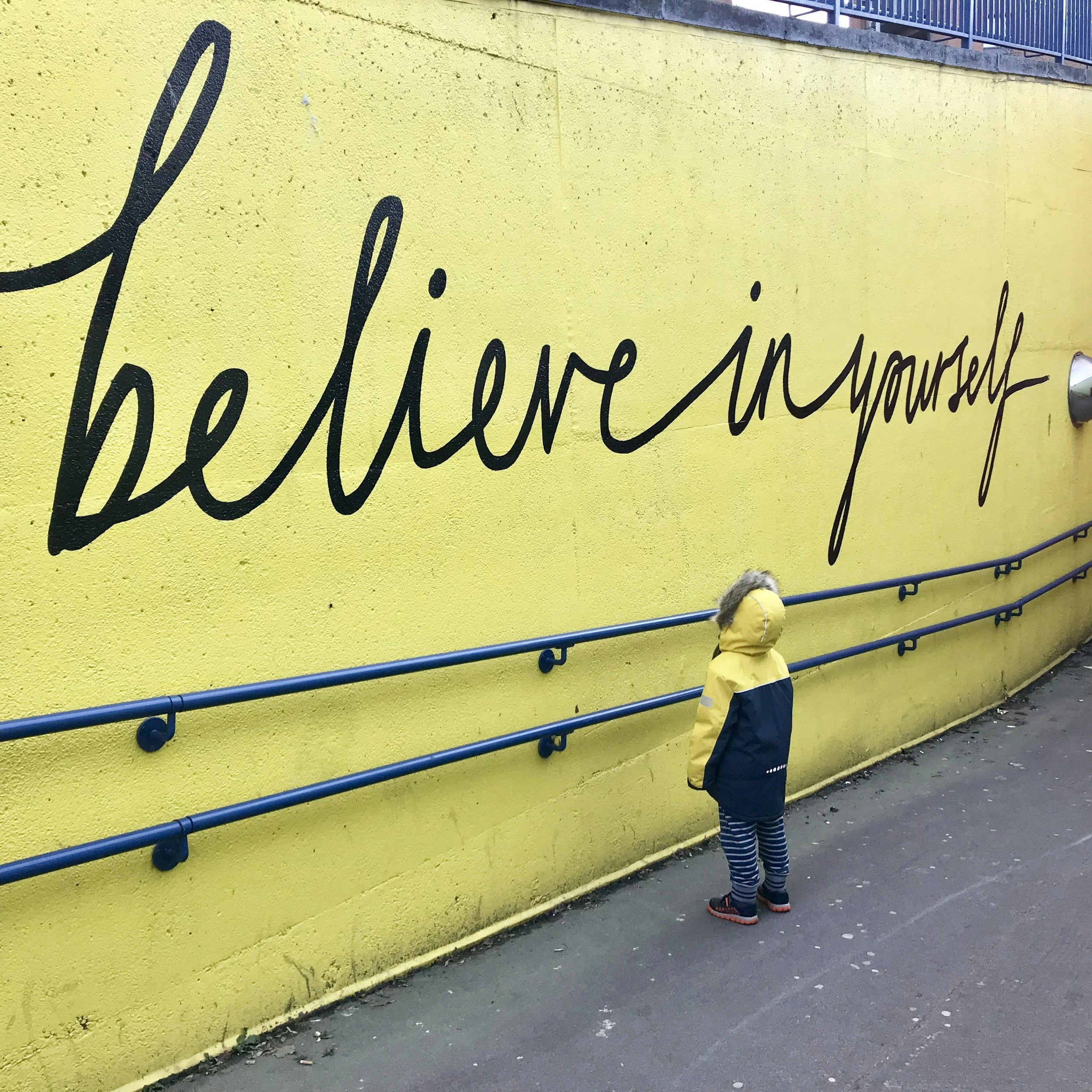
Why Small Business Owners Feel Stuck (And the Mindset Shifts That Change Everything)
Many business owners think they have a sales problem, team problem, or cash problem. Often, the real bottleneck is mindset. Here’s how to break through.
The Founder's Bottleneck: Why Your Mindset is Your Ceiling
Your business can only grow as far as you can think. That's not a motivational cliché — it's a structural reality. When revenue plateaus, when hiring feels impossible to delegate, or when every major decision lands on your desk regardless of how large your team grows, the bottleneck isn't your market. It's you.
Most founders recognize the symptoms without naming the cause: decision fatigue that stretches simple choices into hours, a fear of delegating rooted in the belief that no one else can do it right, and the seductive trap of the hero complex — where being indispensable feels like strength but functions like a ceiling.
"In a growth mindset, challenges are exciting rather than threatening. So rather than thinking, 'Oh, I'm going to reveal my weaknesses,' you say, 'Wow, here's a chance to grow.'" — Carol Dweck, Stanford University Researcher
Finding the best mindset coaching for business owners isn't about therapy or motivation — it's about cognitive reframing with a direct line to revenue. In a business context, mindset coaching rewires the mental models that dictate how founders make decisions, tolerate risk, and build teams.
That internal shift, it turns out, carries a surprisingly measurable price tag — and an even more surprising return.
The Hard Math of Soft Skills: The ROI of Mindset Coaching
Once you recognize that your thinking is the ceiling, the next logical question is: what's it actually worth to raise it? The answer, backed by hard data, is more compelling than most founders expect.
According to research by the International Coaching Federation and PricewaterhouseCoopers, companies that invest in coaching for their leaders see an average return of seven times the initial cost. That's not a rounding error — that's a structural multiplier on your decision-making capacity.
The risk concern dissolves quickly, too. Approximately 86% of companies report breaking even or better on their coaching investment, with nearly one-fifth reporting returns of 50x or more. When nearly nine out of ten businesses recoup their costs, the downside becomes remarkably manageable.
Metric: Average coaching ROI
Business Impact: 7x the initial investment
Metric: Companies breaking even or better
Business Impact: 86%
Metric: Top-tier ROI reported
Business Impact: Up to 50x return
The reason those numbers hold up is rooted in behavior change. Mindset shifts unlock revenue-driving actions — a founder who stops avoiding difficult conversations closes deals faster. One who manages risk tolerance scales without paralysis. Leadership capacity expands, and teams follow suit.
This is exactly why business coaching and mentoring has moved from a "nice-to-have" to a strategic operating expense for serious growth-stage founders.
Of course, not all coaching is the same — and understanding the distinction between coaching and mentoring is where many business owners get tripped up.
Coaching vs. Mentoring: Which Does Your Business Need?
Now that the ROI case is clear, a critical question emerges: are you getting the right kind of support? Mentoring and mindset coaching are routinely confused — but they serve fundamentally different purposes.
The Mentor
A mentor delivers the what — industry-specific knowledge, tactical frameworks, and hard-won experience from their own journey. They've walked a similar path and can hand you a roadmap. This is genuinely valuable, especially in the early stages when you need direction fast.
The Coach
A mindset coach works on the who — the person sitting behind every decision, every missed deadline, and every avoided conversation. As research from Tony Robbins' business coaching work makes clear, while mentoring provides a roadmap based on the mentor's past, mindset coaching builds the internal capacity of the owner to create their own roadmap.
That distinction is everything when you're scaling.
In practice, coaching for executives and founders often works best as a hybrid model. However, most owners over-invest in tactical mentoring and under-invest in the identity-level work that actually sustains growth long-term.
The real leverage? Fix how you think, and the how-to becomes far easier to execute. Which raises the next question: what specific mindsets separate founders who scale from those who stall?
The 5 Essential Business Mindsets for Scaling
Understanding the value of coaching is one thing — knowing which mindsets to actually develop is another. A strong business owner mindset isn't a single trait. It's a layered framework, and each component directly impacts your bottom line. Here are the five that matter most.
The Abundance Mindset: Competitors aren't threats — they're proof your market exists. Founders who operate from abundance pursue partnerships, study rivals strategically, and spend their energy on differentiation rather than defensiveness. Scarcity thinking contracts your market; abundance thinking expands it.
The Resilience Mindset: Market volatility is guaranteed. Burnout is not. Resilient founders build mental systems that absorb setbacks without derailing operations — they separate the emotional weight of a bad quarter from their strategic response to it. In practice, this mindset is what keeps scaling on track when conditions shift unexpectedly.
The Strategic Mindset: Growth stalls when a founder stays too deep in execution. Shifting from "doing" to "leading" means trusting your team, delegating with intention, and reserving your energy for the decisions only you can make. This single shift is responsible for more revenue unlocks than almost any operational change.
The Growth Mindset: Setbacks are data points, not verdicts. Founders who view failure analytically iterate faster, take smarter risks, and build more adaptive businesses. It's no surprise that 80% of senior executives agree that fostering a growth mindset contributes directly to company revenue growth.
The Confidence Mindset: Self-belief isn't soft — it's structural. According to the International Coaching Federation, 80% of people who received business coaching reported a measurable increase in self-confidence. That confidence translates into bolder pricing, stronger hiring decisions, and more decisive leadership.
The good news? Each of these mindsets is coachable — and the right program can accelerate all five simultaneously.
Top Mindset Coaching Programs for Entrepreneurs in 2026
Knowing which mindsets to develop is only half the equation — the other half is finding the right program to develop them. The ROI of business coaching depends heavily on matching the right framework to your stage, goals, and working style. Here's a breakdown of the leading options worth serious consideration.
Business Coaching for Owners Who Feel Stuck (Michael D. Morrison)
Best For: Small business owners who feel overwhelmed, stuck, uncertain what to do next, or frustrated that working harder isn’t creating growth.
Key Philosophy: Growth starts with clarity. Most business owners are not lacking effort—they’re lacking direction, systems, support, and an outside perspective from someone who understands what it’s really like to own a business.
Strategic Coach (Dan Sullivan)
Best For: Established entrepreneurs ready for long-term structural growth
Key Philosophy: Built around the Unique Ability framework, Strategic Coach helps founders systematically delegate everything outside their highest-value activities — so they stop being the bottleneck and start being the multiplier
In practice, this program suits founders who've already achieved some scale but feel stretched thin across too many roles. It's structured, rigorous, and designed for the long game.
Tony Robbins Business Results Coaching
Best For: Entrepreneurs who need a high-intensity breakthrough moment
Key Philosophy: Rapid pattern interruption combined with strategic business frameworks
This program is built for founders stuck in their own heads. The approach prioritizes emotional momentum alongside tactical planning — useful when inertia, not information, is the real problem.
McCarthy Mindset Coaching
Best For: Business owners managing chronic stress while chasing aggressive growth targets
Key Philosophy: Targeted stress reduction paired with structured goal execution
A common pattern with founders at growth inflection points is that anxiety starts undermining performance. This program addresses that specific tension directly.
Small Business Coach Associates (Alan Melton)
Best For: Inc. 500-caliber founders focused on scalable systems
Key Philosophy: Practical accountability combined with growth-stage strategy
This option is particularly well-suited for founders building toward a recognized growth benchmark with a need for both structure and speed.
SCORE Mentoring
Best For: Early-stage founders working with a lean budget
Key Philosophy: Free, experience-based mentoring from retired executives
SCORE is worth mentioning as the most accessible entry point — no financial commitment required, which makes the decision to start essentially risk-free.
Choosing the right program is only part of the decision. What naturally follows is understanding what each actually costs — and whether that investment holds up against realistic return expectations.
The Price of Transformation: How Much Do Mindset Coaches Cost?
Mindset coaching cost is often the first question founders ask — and the wrong place to start the conversation. Price matters, but only when measured against what you're getting in return.
Here's a realistic breakdown of what to expect:
Hourly sessions: $200–$1,000+ depending on the coach's track record and specialization
Executive-level retainers: $2,000–$10,000 per month for ongoing 1-on-1 access, according to industry benchmarks
Group coaching programs: Typically $500–$3,000 for structured cohort formats — lower cost, but less personalized
Intensive workshops or retreats: $1,500–$5,000+ for immersive, short-term formats
The real question isn't "how much does it cost?" — it's "what does staying stuck cost you every quarter?"
When the ICF's research points to a 7x average ROI on coaching investments, a $2,000/month retainer starts looking less like an expense and more like leverage. However, price alone doesn't guarantee results. Knowing how to evaluate whether a coach is actually qualified to deliver that ROI — that's where due diligence becomes critical.
How to Vet a Mindset Coach: Certifications and Standards
Not every coach calling themselves a "mindset expert" has earned that title. Before committing your time and budget, a structured vetting process protects your investment.
The credential baseline matters. The International Coaching Federation is the gold standard for coaching credentials, requiring rigorous training and logged coaching hours. Look for coaches holding ACC, PCC, or MCC designations — in that ascending order of depth.
Your Vetting Checklist
✅ Holds an ICF-recognized credential (ACC minimum)
✅ Specializes in entrepreneurial or founder contexts — not generic life coaching
✅ Demonstrates a documented methodology, not intuition-based sessions
✅ Can provide founder-specific case studies or measurable outcomes
✅ Offers a discovery call before any financial commitment
Three Questions Worth Asking Directly
"What is your coaching methodology?" — Vague answers are a red flag.
"Can you show founder-specific case studies?" — Pattern recognition matters.
"How do you measure progress?" — Accountability requires metrics.
The right coach transforms your biggest bottleneck — you — into your greatest competitive advantage. Start vetting with the same rigor you'd apply to any high-stakes business hire.
Key Takeaways
Best For: Established entrepreneurs ready for long-term structural growth
Best For: Entrepreneurs who need a high-intensity breakthrough moment
Key Philosophy: Rapid pattern interruption combined with strategic business frameworks
Best For: Business owners managing chronic stress while chasing aggressive growth targets
Key Philosophy: Targeted stress reduction paired with structured goal execution
If your business feels stuck, the problem may not be your business—it may be the way you’re thinking about it. Sometimes the fastest path forward is an outside perspective.
Schedule A Free Business Growth Call
Click Here to schedule a FREE consultation with one of the top small business coaches located in Oklahoma City to help you plan your growth strategies.
Or call 405-919-9990 today!